What Are the Benefits of Regular Cleaning for an Office?
Understand how frequent office cleaning boosts appearance, hygiene, and productivity in the workplace.
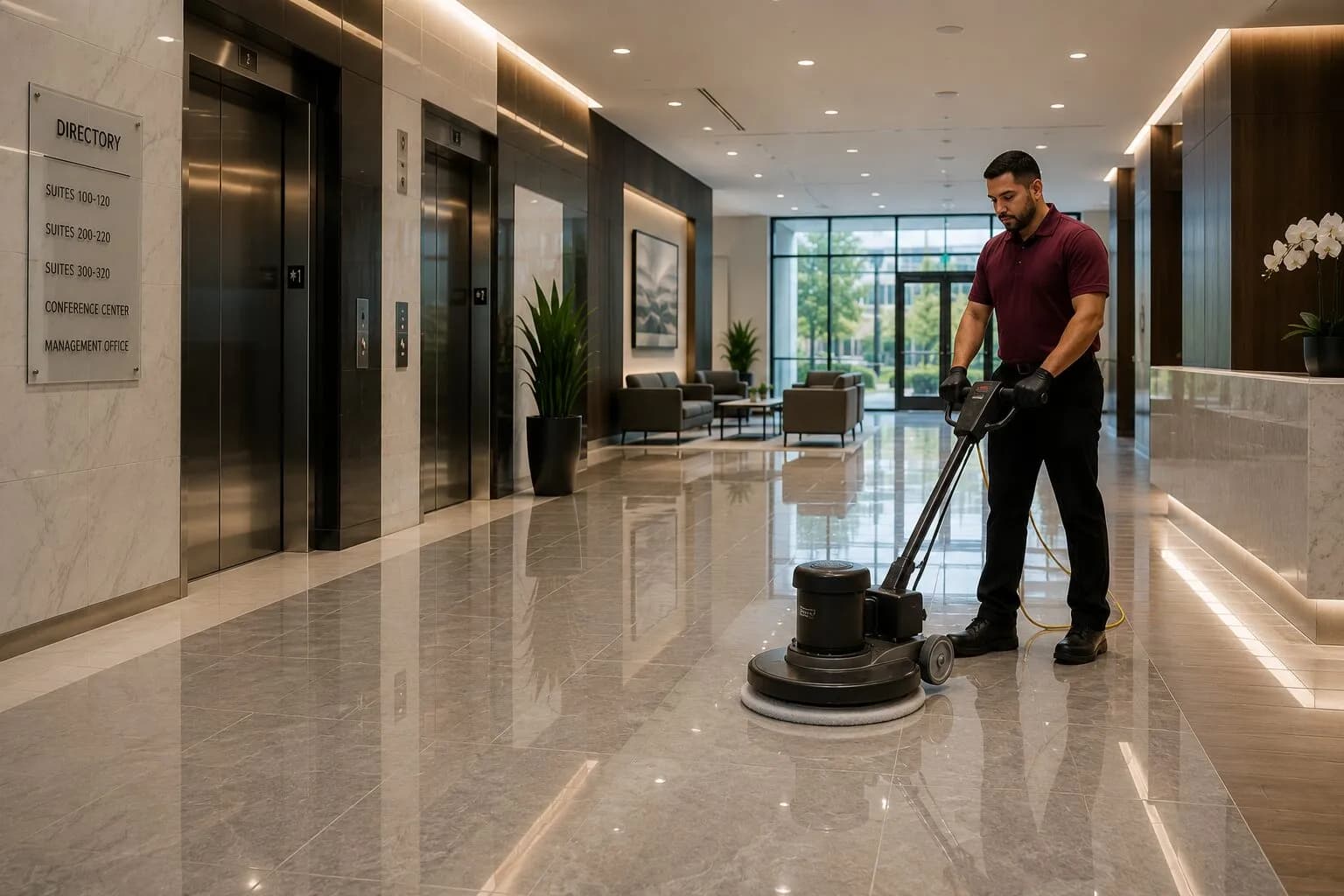
Consistent office cleaning helps workplaces manage the dust, waste, spills, fingerprints, and general mess created through everyday use. Frequent attention can keep shared facilities presentable, maintain predictable cleanliness standards, and prevent minor cleaning issues from becoming larger tasks. For office decision-makers, the value depends on how effectively the cleaning frequency matches occupancy, visitor traffic, workplace layout, operating hours, and the way employees use shared spaces.
Why Does Regular Office Cleaning Matter?
Offices continuously generate cleaning requirements. Employees use desks, meeting rooms, kitchens, washrooms, corridors, entrances, and shared equipment throughout the working day. Visitors can add further traffic to reception and client-facing areas.
Without regular attention, bins fill, floors collect debris, washrooms become untidy, and frequently touched surfaces accumulate marks. A daily cleaning service can keep these recurring tasks manageable by addressing them at planned intervals rather than allowing routine mess to build up.
Key Benefits of Regular Professional Office Cleaning
Frequent cleaning offers practical advantages beyond improving appearance. A structured schedule can create consistency across different areas while making it easier to identify spaces that require additional attention.
Maintains Consistent Workplace Cleanliness
Regular cleaning prevents everyday mess from remaining in the office for extended periods. Cleaners can remove waste, vacuum carpets, mop hard floors, wipe accessible surfaces, and maintain shared facilities according to an agreed schedule.
Consistency becomes particularly important in busy offices where multiple employees use the same rooms and facilities. Planned attention reduces noticeable variations in cleanliness between working days.
Creates a More Professional Office Appearance
Entrances and reception areas often form a visitor's first physical impression of a workplace. Dirty floors, overflowing bins, dusty surfaces, marked glass, or untidy meeting rooms can make otherwise well-maintained premises appear neglected.
Frequent cleaning helps keep reception desks, entrance floors, meeting spaces, corridors, and other visible areas presentable. This matters especially for workplaces that regularly receive customers, applicants, contractors, suppliers, or other visitors.
Keeps High-Traffic and Shared Areas Better Maintained
Some office areas accumulate mess considerably faster than others. Corridors, lifts, kitchens, washrooms, entrances, and break rooms can experience repeated use throughout operating hours.
A regular schedule allows cleaning effort to reflect this activity. Busy spaces can receive greater attention, while low-use rooms may require less frequent work. This approach allocates cleaning time according to practical demand rather than treating every area identically.
Supports Better Workplace Hygiene Practices
Routine cleaning supports workplace hygiene by addressing surfaces and facilities that employees repeatedly use. Typical tasks include cleaning washroom fixtures, wiping suitable shared surfaces, removing waste, maintaining kitchen areas, and attending to frequently touched points.
Door handles, lift controls, switches, shared counters, handrails, and similar surfaces may require particular attention in heavily occupied offices. The required frequency should reflect actual use and workplace hygiene procedures.
Prevents Dirt and Grime from Building Up
Dust, tracked-in soil, food debris, spills, and surface marks become harder to manage when they remain unattended. Regular maintenance removes much of this material before significant accumulation occurs.
Routine care can also support the condition of flooring, fixtures, and other frequently used surfaces. Prompt removal of abrasive debris from floors, for example, can form part of sensible ongoing floor maintenance.
Provides More Consistent Cleaning Standards
A defined cleaning programme establishes clear responsibilities. Task lists can specify what cleaners should complete, which areas require attention, and how frequently each activity should occur.
Checklists, inspections, issue logs, and reporting processes can further support consistency. If the same problem repeatedly appears, office managers can adjust task frequency, cleaning time, equipment, or responsibilities rather than relying on informal requests.
Which Office Areas Benefit Most from Frequent Cleaning?
Areas with high occupancy, regular visitor contact, food preparation, waste generation, or repeated surface contact generally need the most attention. Their condition can change quickly during a normal working day.
Common priority areas include:
Entrances and receptions: Foot traffic brings in dirt and debris, while visitors make presentation particularly important.
Desks and shared workspaces: Accessible surfaces and communal work areas can collect dust, crumbs, and general clutter.
Meeting rooms: Tables, floors, and shared surfaces may require attention after repeated meetings.
Washrooms: Regular use creates ongoing requirements for fixture, floor, surface, and consumable maintenance.
Kitchens and break rooms: Food preparation, drinks, spills, crumbs, and waste can create recurring cleaning needs.
Corridors and communal routes: Frequent movement increases floor-cleaning requirements.
Frequently touched surfaces: Handles, switches, rails, and shared controls may need planned attention.
Waste and recycling points: Regular emptying helps prevent overflowing containers and accumulated waste.
Floors and carpets: Soil and debris can become increasingly visible in heavily used areas.
How Can Regular Cleaning Fit Around Office Operations?
Cleaning does not need to interrupt normal office activity. Scheduling can take place before opening, after employees leave, during quieter periods, or through carefully managed daytime cleaning.
The appropriate arrangement depends on operating hours and the tasks involved. Vacuuming near occupied desks may cause unnecessary disruption, whereas washroom checks or waste removal may need attention while the workplace remains open.
Access and security also require planning. Keys, access cards, alarms, restricted rooms, confidential work areas, and equipment storage should follow clearly defined procedures.
Does Every Office Need Cleaning Every Day?
Not necessarily. Cleaning frequency should reflect actual workplace conditions rather than a fixed rule.
A large office with hundreds of employees, frequent visitors, multiple washrooms, shared kitchens, and extended operating hours may generate substantial daily cleaning requirements. In contrast, a small office with limited occupancy and little visitor traffic may need some tasks less frequently.
Decision-makers should consider office size, employee numbers, visitor volume, foot traffic, operating hours, shared facilities, business activities, flooring, waste generation, workplace layout, and seasonal conditions. Wet weather, for instance, can increase the amount of moisture and soil carried through entrances.
Daily Cleaning vs Periodic Deep Cleaning
Routine office cleaning focuses on recurring tasks such as waste removal, vacuuming, mopping, washroom care, surface wiping, kitchen cleaning, and maintaining communal areas.
Periodic work addresses less frequent requirements. These can include carpet extraction, upholstery cleaning, detailed floor treatment, high-level dusting, hard-to-reach areas, and intensive cleaning of specific fixtures or surfaces.
Both serve different purposes. Regular maintenance controls everyday cleaning demands, while deeper scheduled work addresses tasks that do not need completion during every cleaning visit.
Conclusion
Regular office cleaning can provide consistent cleanliness, better-maintained shared spaces, reliable waste removal, improved presentation, and more manageable routine maintenance. It also creates clearer cleaning standards through planned schedules and defined responsibilities. However, the appropriate frequency varies between workplaces. Office size, occupancy, visitor traffic, layout, shared facilities, operating hours, and seasonal conditions should determine how often individual areas and tasks require attention.