10 Things to Check Before Booking Exterior Graffiti Removal
Ensure graffiti removal success by confirming authorization, wall material, and contractor details before booking.
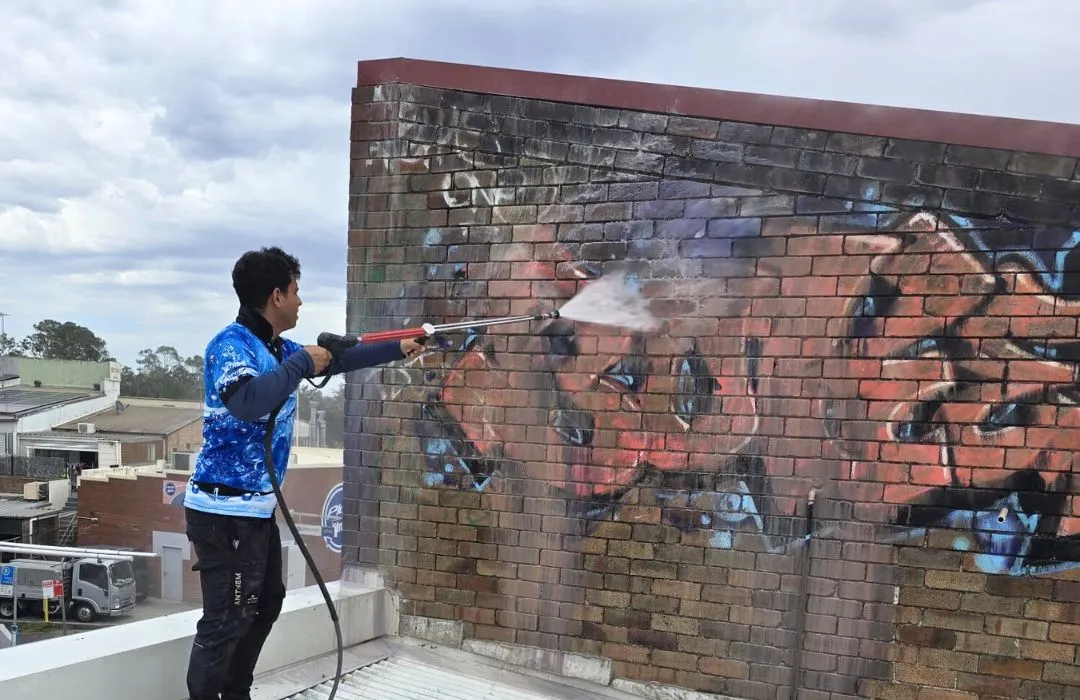
Before booking graffiti removal, confirm who can authorize work, identify the wall material and finish, and ask how the contractor will protect the surface, the work area, and nearby people. At a San Antonio storefront, for example, a mark beside an entrance may require a different setup from one on a rear wall. The location affects access and scheduling, while the finish and condition shape the method, price, and appearance the contractor can reasonably commit to. Ask for those details in writing before approving the job.
1. Confirm who can authorize work on the wall
Check the lease or property records to identify who controls the wall. A tenant may manage its storefront while the property manager handles a façade that serves several suites. If the mark extends onto neighboring property or a public asset, contact the owner or responsible public agency before including that surface in the scope.
When the lease leaves responsibility unclear, send the landlord or property manager a photo that shows the exact location and ask who can sign the work order. If the exterior has a historic designation or other protection, ask the city’s historic preservation office whether the proposed work needs review before you authorize a test or treatment.
2. Document the mark and the wall’s condition
Take photos from a location you can safely reach. Start with a wide view that shows the wall, nearby doors, and the ground below the mark. Then take a closer view of the graffiti and surrounding finish. Note the approximate width, height, and distance above grade. If you can see cracks, flaking paint, or older repairs, document where they sit relative to the mark. Tell the contractor whether the photos show the whole mark or only the portion you could see. Ask it to verify dimensions on site before it prices equipment or labor.
When contacting providers of commercial cleaning services in San Antonio, send the photos and request a site assessment and written scope. On painted stucco, ask how the contractor will check whether removal could disturb the existing paint. On unpainted brick, ask how it will assess the brick faces and mortar joints. If you cannot identify the finish, ask the contractor to confirm it before proposing a method.
3. Ask why the contractor recommends its method
Ask the contractor to explain how the proposed method suits both the graffiti and the condition of the wall. A useful answer identifies what the crew wants to remove, what finish it needs to preserve, and what it will check before treating the full area. If the wall has an older repair or mixed finishes, ask whether those sections need separate evaluation.
Review a test area before extending the work
If the contractor proposes a test, agree on a small, representative spot and decide when to review it. Compare the spot with the adjoining wall once the finish is ready to assess. Look at color, sheen, texture, and any change to the existing coating. If the test reveals paint loss or a change you cannot accept, have the authorized property contact review a revised method or finish option before approving further work.
Photograph the approved sample and note what the contractor expects to replicate. If the wall has more than one finish, agree on where each approved method will apply.
4. Verify how the crew will reach the mark
Ask what changes if the graffiti sits above a stairway, canopy, or sloping parking area. A ground-level mark may allow the crew to approach directly, while an elevated mark may require space to bring in and position access equipment. Have the contractor identify its proposed setup location and the space it needs to work.
Confirm who will check that the site can accommodate the setup, including any parking or delivery areas it may occupy. If the contractor needs a separate access assessment, ask when it will happen and whether the price or appointment remains provisional until the contractor completes it.
5. Protect pedestrian routes and nearby property
Walk the area with the contractor and identify doors, windows, signs, parked vehicles, landscaping, and occupied spaces near the wall. For graffiti beside a busy storefront, ask where the work zone begins and ends, who will notify tenants, and how customers can reach the entrance during the visit. If the crew needs to work across the doorway, confirm a suitable access plan with the property contact before choosing the time. During the walkthrough, trace the customer route from the parking area to the entrance. Verify that any proposed detour preserves accessible entry and leaves neighboring doors usable.
Use the walkthrough to settle these responsibilities.
● Identify who marks the boundary and checks that pedestrian routes stay clear.
● Confirm who contacts tenants or drivers if vehicles must move.
● Ask what the crew will use to protect nearby glass, signs, and landscaping.
● Name the person who can revise the setup if the planned route becomes unavailable.
6. Confirm how the crew will manage runoff and residue
Ask whether the proposed method produces wash water, loosened paint, or other residue. If it does, have the contractor identify nearby drains and explain how it will control runoff and collect debris. Ask who checks where each drain leads and who handles collection and disposal when the site or material calls for it.
For example, if a sloped sidewalk directs water toward a street inlet, flag that location during the assessment. Ask the contractor to explain how its plan keeps wash water out of the inlet and meets any requirements that apply to the site. Confirm whether the quote includes that work.
7. Choose a work window that fits the property
Compare the proposed appointment with business hours, deliveries, and parking demand. If the wall borders the only customer entrance, an earlier or later slot may give the crew room to work while preserving access during opening hours. Check whether that window also suits neighboring tenants and any delivery schedule.
If the contractor needs water or power, name the site contact who confirms availability and access before the crew arrives. Ask what weather conditions could prompt a delay and who makes that call. Then agree on who will notify tenants and update the booking if the schedule changes.
8. Check experience with comparable walls
Ask for examples that match the wall material, finish, and access conditions. A useful example shows the surface before and after work and explains any visible difference the client accepted. If the contractor proposes a separate specialist or subcontractor, confirm who will perform the work and who will supervise it on site.
For a fragile coating, historic masonry, or an exterior with multiple layers of paint, ask whether the contractor wants a separate assessment before committing to a method. Confirm what it will assess and whether that visit carries a separate charge. Use the findings to decide what belongs in the scope.
9. Agree on the expected finish and price
Ask whether the price covers removing the graffiti, reducing how visible it is, or completing separate finish work such as repainting. A faint outline or a cleaner patch may still stand out against surrounding wear. If the contractor conducts a test, use the result to discuss what the wall may look like from the sidewalk and whether the agreed appearance will require finish work. If repainting enters the scope, agree on the area the crew will paint and who approves the color and sheen. A small touch-up and a full wall section can produce different quotes.
Identify what can change the quote
Check whether the price includes the test, access equipment, site protections, residue management, and any agreed repainting. If the crew finds loose paint or a previous repair that changes the proposed work, ask it to document the condition and explain the price or schedule effect. Name who can approve additional work and have the contractor obtain that approval before expanding the scope.
10. Assign the final inspection and reopening
Name the property contact who will inspect the wall with the supervisor. Compare before and after photos from similar viewpoints to establish which area the crew treated and which marks or repairs need a separate decision. Check the result against the finish and boundaries you approved.
Closeout checklist
● Check that the crew treated the agreed section of wall.
● Review the finish for any remaining outline, color difference, or visible damage.
● Confirm that the crew cleared equipment and residue from the work area.
● Record any follow-up work and identify who will approve it.
Have the property contact record the result and confirm with the supervisor that the site can reopen the work area.
Put the approved scope in the quote
Before accepting the quote, ask the contractor to record the approved method, site protections, and expected finish for the specific wall. Add the name of the person who can authorize changes so the crew knows whom to call if the assessment or test changes the plan.