Restaurant Deep Cleaning vs Daily Cleaning Explained
Explore how deep and daily cleaning keep your restaurant clean, tackling visible dirt and hidden grime for a hygienic space.
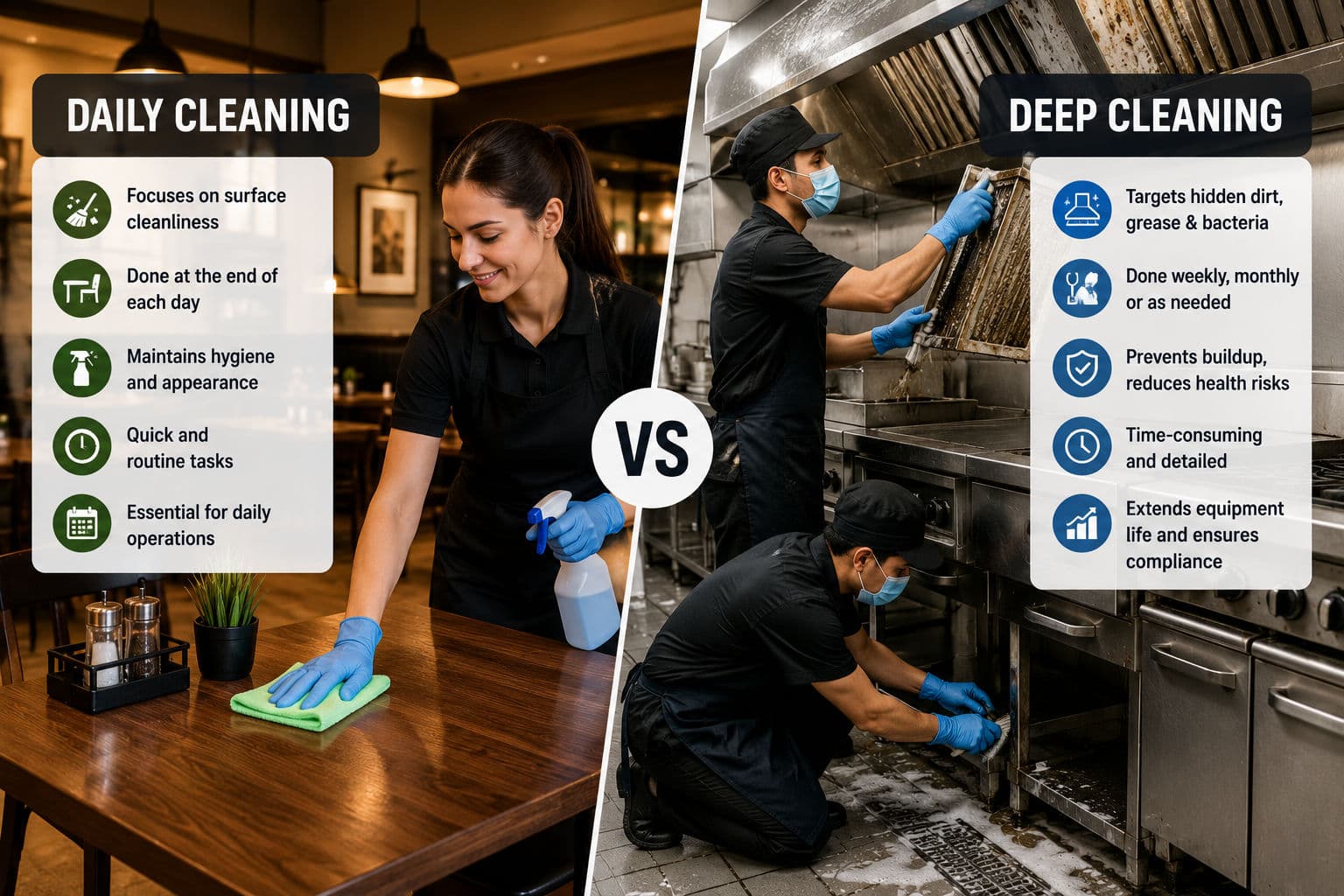
Restaurants require consistent cleaning because food residue, grease, spills, dust, odours, and heavy foot traffic can quickly affect working and customer areas. Daily cleaning handles recurring surface-level tasks, while deep cleaning addresses accumulated dirt in floors, corners, walls, upholstery, equipment exteriors, drains, storage areas, and other overlooked locations. Professional cleaning services can provide the equipment, techniques, and physical effort needed for demanding cleaning work. Therefore, understanding the difference between daily and deep cleaning helps restaurant operators maintain cleaner, fresher, and more hygienic premises while keeping routine maintenance manageable.
What Is Daily Restaurant Cleaning?
Daily restaurant cleaning covers recurring tasks that staff or cleaning personnel perform to control visible dirt and maintain basic cleanliness throughout operating areas. These tasks normally focus on surfaces and locations that receive frequent use.
A consistent daily routine helps prevent food particles, grease, dust, spills, and other residues from accumulating. Moreover, regular cleaning supports a more orderly working environment and reduces the amount of buildup that later requires intensive treatment.
Common Daily Cleaning Tasks
Daily restaurant cleaning may include:
● Sweeping and mopping floors.
● Wiping tables and service surfaces.
● Cleaning visible spills.
● Emptying waste containers.
● Wiping frequently touched surfaces.
● Cleaning food preparation surfaces.
● Removing visible dirt from entrances.
● Cleaning accessible sinks and surrounding areas.
● Wiping chairs and frequently used furniture.
● Cleaning visible marks from doors and walls.
These tasks keep everyday conditions under control. However, daily cleaning does not necessarily reach every concealed or difficult area.
Why Daily Cleaning Matters
A restaurant experiences continuous activity, so dirt can return quickly after cleaning. Food particles may fall beneath furniture, grease can collect near cooking areas, and moisture can leave residue on floors.
Consequently, skipping routine cleaning can allow small amounts of debris to accumulate into larger cleaning problems. A structured daily schedule helps maintain consistent standards between deeper cleaning sessions.
What Is Restaurant Deep Cleaning?
Deep cleaning involves more intensive work on surfaces and areas that daily routines may not adequately address. It targets accumulated grime, grease, residue, dust, stains, odours, and debris in locations that receive less frequent attention.
Professional cleaners may use specialised equipment and cleaning methods according to the surface and condition. Therefore, deep cleaning should complement daily maintenance rather than replace it.
Areas Commonly Included in Deep Cleaning
A deeper restaurant cleaning service may address:
● Floor edges and corners.
● Behind and beneath accessible equipment.
● Wall surfaces.
● Ceiling areas and vents where accessible.
● Baseboards and skirting.
● Grout lines.
● Upholstered seating.
● Door frames.
● Storage areas.
● High and low surfaces.
● Hard-to-reach gaps.
● Exterior surfaces of suitable equipment.
The exact scope depends on the property's layout, materials, equipment, and service requirements.
Why Deep Cleaning Requires More Time
Deep cleaning involves more detailed work than ordinary surface cleaning. Cleaners may need to move accessible items, scrub accumulated residue, use extraction equipment, treat stains, or work carefully around sensitive surfaces.
Additionally, heavily soiled areas may require several stages rather than one quick cleaning pass. Consequently, operators should schedule deep cleaning when sufficient time exists to complete the required tasks properly.
Daily Cleaning and Deep Cleaning Serve Different Purposes
Daily cleaning and deep cleaning should not compete with each other. Instead, they perform separate functions within a complete restaurant maintenance routine.
Daily cleaning controls immediate messes and recurring surface dirt. Deep cleaning addresses buildup that develops gradually despite regular maintenance.
Daily Cleaning Focuses on Maintenance
The main purpose of daily cleaning is to keep frequently used areas presentable and manageable. Staff can remove spills, food particles, visible dirt, and surface residue before these materials become difficult to remove.
This approach is especially important in high-traffic areas. Entryways, dining floors, service counters, and food preparation surfaces may require repeated attention throughout operating periods.
Deep Cleaning Focuses on Accumulated Buildup
Deep cleaning goes beyond visible maintenance. It addresses grime in corners, beneath equipment, along floor edges, inside gaps, and on surfaces that staff may not clean every day.
Moreover, professional deep cleaning can address stains and residue that routine wiping or mopping cannot adequately remove.
Why Restaurant Floors Need Both Cleaning Levels
Restaurant floors receive substantial traffic and can collect food particles, grease, dust, moisture, and outdoor dirt. Consequently, floor maintenance requires both frequent cleaning and periodic intensive treatment.
Daily Floor Cleaning
Daily floor care usually involves sweeping, vacuuming where appropriate, spot cleaning, and mopping with a suitable method. Spills should receive prompt attention because residue can become harder to remove after drying.
High-traffic pathways may require additional cleaning during operating periods. Likewise, entrances can collect outdoor dirt faster than less-used sections.
Deep Floor Cleaning
Deep floor cleaning targets accumulated grime along:
● Corners.
● Baseboards.
● Grout lines.
● Floor transitions.
● Beneath accessible furniture.
● Areas surrounding fixed equipment.
● Edges near service counters.
Professional equipment can help loosen and remove embedded soil when the flooring permits the selected method.
Managing Restaurant Stains
Stains can appear on floors, walls, upholstery, carpets, tables, and other surfaces. Food residue, beverages, grease, mud, and cleaning chemicals can all leave marks depending on the material.
Why Prompt Stain Removal Matters
Fresh spills often require less effort than established stains. Therefore, daily cleaning should address visible marks as soon as practical.
However, some stains remain after ordinary cleaning. Professional cleaners can assess the material and choose an appropriate treatment rather than applying the same chemical to every surface.
Professional Stain Treatment
Stain-removal results depend on the stain type, surface material, age, previous treatments, and degree of penetration. Professional cleaners may use controlled spot treatment, extraction, agitation, or other suitable techniques.
No responsible cleaning service should guarantee complete removal of every stain. Some discoloration may result from permanent material changes rather than removable residue.
Odour Control Requires More Than Fragrance
Restaurants can develop unwanted odours from food residue, waste, grease, damp materials, and accumulated debris. Fragrance products may temporarily alter the smell without addressing the underlying source.
Cleaning the Source of Odours
Effective odour control starts with identifying and cleaning the affected area. Floors, carpets, upholstery, waste areas, drains, and other surfaces may require different approaches.
Professional cleaning can target residue rather than simply covering the smell. Depending on the material, cleaners may use extraction, washing, targeted treatment, or other suitable methods.
Why Deep Cleaning Helps With Persistent Odours
If an odour continues after ordinary cleaning, residue may remain in a porous or difficult-to-reach surface. Deep cleaning can provide more detailed attention to those areas.
Nevertheless, results vary according to the source and condition. Cleaning should therefore focus on realistic removal of residue rather than promising permanent odour elimination in every situation.
Upholstery and Seating Areas
Restaurant seating can collect dust, food particles, spills, hair, and other residue. Fabric-covered chairs, booths, cushions, and upholstered benches may require more than routine wiping.
Daily Seating Maintenance
Staff can remove visible debris, wipe suitable surfaces, and address fresh spills during routine cleaning. These actions help maintain a presentable dining environment.
However, fabric surfaces can retain material below the visible surface. Therefore, periodic professional upholstery cleaning may become necessary.
Deep Upholstery Cleaning
Professional upholstery cleaning can involve detailed vacuuming, controlled moisture, extraction, or other methods suitable for the fabric. Cleaners should assess material construction before selecting a process.
Different fabrics tolerate moisture and agitation differently. Consequently, professional cleaning should remain material-specific.
Walls, Doors, and Vertical Surfaces
Daily restaurant cleaning often focuses on horizontal surfaces because they collect visible food particles and spills. Yet walls, doors, frames, and partitions can also accumulate grease, fingerprints, dust, and marks.
Why Vertical Surfaces Need Attention
Repeated contact and airborne residue can gradually affect the appearance of walls and doors. Deep cleaning can target marks that ordinary daily routines overlook.
Cleaning methods should match the paint, coating, material, and finish. Excessive moisture or harsh chemicals may damage certain surfaces.
Cleaning Hard-to-Reach Areas
Some of the most important deep-cleaning tasks involve locations that staff cannot easily reach during busy operating periods.
These areas can include:
● Beneath accessible equipment.
● Behind movable furniture.
● Around fixed fixtures.
● Along baseboards.
● Inside corners.
● Behind doors.
● Under seating.
● Around floor drains.
● High surfaces that require suitable access equipment.
Why Overlooked Areas Matter
Dirt left in difficult locations can accumulate over time and may eventually spread to surrounding areas. Additionally, neglected corners can make a restaurant appear less thoroughly maintained.
Professional cleaners can allocate dedicated time to these locations and use appropriate tools for access.
Dust, Grease, and Residue Accumulation
Restaurants can experience multiple types of buildup simultaneously. Dust may settle on elevated surfaces, while grease and food residue can accumulate near cooking and service areas.
Daily Control of Surface Buildup
Routine dusting and wiping can prevent light deposits from becoming heavier. Likewise, regular floor cleaning can remove loose particles before they become embedded.
Deep Removal of Established Residue
Deep cleaning addresses heavier buildup through more intensive methods. Depending on the surface, cleaners may use degreasing, scrubbing, extraction, or other appropriate techniques.
The selected process should always match the material. A powerful cleaning chemical may remove grease effectively while causing damage to an unsuitable surface.
Professional Cleaning Equipment
Professional cleaning services can use equipment designed for intensive residential and commercial cleaning tasks. Commercial vacuums, floor machines, extraction systems, pressure-controlled tools, and specialised attachments may support deeper cleaning.
Why Equipment Can Improve Results
Professional equipment can remove material that ordinary tools may leave behind. For example, extraction systems can remove suspended soil from suitable carpets and upholstery.
However, equipment alone does not guarantee effective cleaning. Proper technique, correct settings, suitable products, and material knowledge remain equally important.
Sanitation and Restaurant Cleaning
Cleaning and sanitation are related but not identical. Cleaning removes dirt, grease, food residue, and other unwanted material from surfaces. Sanitation involves reducing microorganisms to a level considered acceptable under applicable requirements and procedures.
Why Cleaning Comes First
A visibly dirty surface can interfere with effective sanitation because residue may remain on the material. Therefore, appropriate cleaning should form part of a structured hygiene process.
Restaurant operators should follow applicable food-safety and sanitation requirements for their location and operation. Professional cleaning can support general cleanliness but should not replace legally required procedures.
How Deep Cleaning Reduces the Workload
Intensive restaurant cleaning can consume considerable time and physical effort. Staff who repeatedly scrub floors, clean upholstery, reach difficult corners, and treat stubborn stains may have less time available for other responsibilities.
Professional Assistance for Intensive Tasks
Professional cleaners can handle designated deep-cleaning tasks using suitable equipment and established procedures. This arrangement can reduce the burden on restaurant personnel.
For operators seeking professional deep cleaning services in San Antonio, selecting a provider according to the property's surfaces, cleaning requirements, and desired service scope can make intensive maintenance more manageable.
When Should a Restaurant Schedule Deep Cleaning?
Deep cleaning should form part of a planned maintenance routine rather than occur only after conditions become visibly poor.
Signs That Deep Cleaning Is Needed
Consider scheduling professional deep cleaning when:
Grease remains after routine cleaning.
Floor edges show visible buildup.
Persistent odours remain.
Upholstery appears heavily soiled.
Grout lines have darkened.
Dust accumulates on overlooked surfaces.
Stains remain after appropriate daily treatment.
Areas beneath equipment require attention.
Routine cleaning takes increasingly longer.
The premises need a detailed cleaning reset.
The appropriate frequency depends on restaurant size, traffic, menu type, flooring, furniture, equipment, and daily cleaning standards.
How Often Should Deep Cleaning Take Place?
There is no universal schedule for every restaurant. A small operation with limited seating may have different requirements from a large, busy premises with extensive kitchen and dining areas.
Factors That Influence Frequency
Consider:
● Customer traffic.
● Kitchen activity.
● Type of flooring.
● Amount of grease produced.
● Upholstered seating.
● Carpet coverage.
● Frequency of spills.
● Entrance traffic.
● Existing cleaning standards.
● Size and layout of the premises.
A professional assessment can help determine which areas require frequent attention and which can receive periodic deep cleaning.
Creating a Practical Restaurant Cleaning Checklist
A structured checklist can help separate daily responsibilities from deeper maintenance.
Daily Cleaning Checklist
Daily tasks may include:
● Sweep and mop appropriate floors.
● Wipe dining surfaces.
● Clean visible spills.
● Empty waste containers.
● Wipe high-touch surfaces.
● Clean food preparation areas.
● Remove visible debris.
● Check entrances.
● Clean accessible seating surfaces.
Deep Cleaning Checklist
Periodic tasks may include:
● Clean floor edges.
● Treat grout lines.
● Clean behind accessible equipment.
● Deep-clean upholstery.
● Treat persistent stains.
● Clean walls and door frames.
● Address difficult corners.
● Remove accumulated residue.
● Clean storage areas where appropriate.
● Detail overlooked surfaces.
Separating these responsibilities helps staff maintain daily standards while ensuring deeper tasks do not disappear from the cleaning schedule.
Factors to Consider When Hiring Professional Cleaners
Choosing a professional cleaning service requires attention to the property's actual requirements. A restaurant with extensive carpet, tile, upholstery, and grease buildup may require a broader service scope than a smaller premises with limited surfaces.
Questions Worth Asking
Before hiring cleaners, consider:
● Which surfaces can the service clean?
● What equipment does the provider use?
● Can the service handle upholstery?
● Does it provide stain treatment?
● Can cleaners address floor edges and grout?
● How does the service handle odour-related cleaning?
● Are difficult areas included?
● What preparation does the restaurant need?
● How are additional tasks priced?
● What results can reasonably be expected?
Clear communication can prevent misunderstandings and help establish a practical cleaning plan.
Maintaining Cleanliness Between Deep Cleaning Sessions
Deep cleaning works best when daily cleaning continues consistently. Regular maintenance limits the amount of residue that accumulates between professional visits.
Practical Maintenance Measures
Restaurant operators can:
● Clean spills promptly.
● Sweep high-traffic areas regularly.
● Mop suitable floors according to operating needs.
● Remove food residue from surfaces.
● Empty waste containers consistently.
● Wipe seating after appropriate use.
● Inspect corners and floor edges.
● Check entryways for tracked-in dirt.
● Monitor recurring stains.
● Record areas requiring additional attention.
These actions help keep daily conditions manageable and allow professional cleaners to focus on deeper work.
Why Daily and Deep Cleaning Should Work Together
Daily cleaning creates the foundation for a consistently maintained restaurant. Deep cleaning provides additional attention to areas where ordinary routines cannot remove accumulated dirt.
Neither approach should replace the other. Daily cleaning controls immediate problems, while deep cleaning addresses longer-term buildup.
A Balanced Cleaning Strategy
A practical strategy can follow this pattern:
● Perform routine cleaning throughout each operating cycle.
● Address spills and visible dirt promptly.
● Inspect high-traffic areas regularly.
● Schedule deeper cleaning according to buildup.
● Prioritise floors, upholstery, corners, and overlooked surfaces.
● Review cleaning results and adjust the schedule when conditions change.
This approach can maintain more consistent cleanliness without expecting daily staff to perform every intensive cleaning task.
Frequently Asked Questions
What is the main difference between daily and deep restaurant cleaning?
Daily cleaning handles recurring tasks such as sweeping, mopping, wiping surfaces, removing spills, and emptying waste. Deep cleaning addresses accumulated dirt, grease, stains, dust, and residue in less frequently cleaned areas. Both serve different purposes and should operate together as part of a structured restaurant maintenance routine.
How often should restaurants receive professional deep cleaning?
Frequency depends on customer traffic, kitchen activity, flooring, seating, grease levels, spills, and existing cleaning standards. Busy premises may require more frequent intensive cleaning than smaller operations. Rather than following one fixed schedule, restaurant operators should assess visible buildup and cleaning performance when deciding how often deeper service is necessary.
Can professional cleaners remove grease buildup?
Professional cleaners can treat suitable surfaces with appropriate degreasing products, agitation, extraction, or other cleaning methods. The process must match the material because aggressive chemicals can damage certain finishes. Heavy buildup may require multiple cleaning stages, and results depend on the surface, residue age, and previous treatment.
Can deep cleaning remove restaurant odours?
Deep cleaning can address residue that contributes to persistent odours on suitable surfaces. Cleaners may target floors, upholstery, waste areas, and other affected locations using material-specific methods. However, results vary according to the source and condition. Cleaning should focus on removing residue rather than merely covering unpleasant smells.
Why are floor edges included in deep cleaning?
Floor edges and corners often collect dirt, grease, dust, and food particles that routine sweeping or mopping may leave behind. Over time, this buildup can become noticeable and harder to remove. Deep cleaning gives these locations dedicated attention, helping maintain a more consistent level of cleanliness throughout the premises.
Is upholstery cleaning necessary in restaurants?
Upholstered seating can collect food particles, dust, spills, and surface residue. Routine wiping may not adequately clean fabric materials. Periodic professional upholstery cleaning can provide deeper treatment using methods suitable for the specific fabric. Cleaning frequency depends on customer traffic, visible soiling, material type, and the restaurant's maintenance routine.
Can professional cleaning remove stubborn stains?
Professional cleaners can treat many removable stains with methods selected for the affected material. Results depend on stain type, age, surface condition, previous cleaning attempts, and material construction. Some discoloration may remain if the surface itself has suffered permanent damage. Therefore, homeowners and operators should request realistic expectations before treatment.
Does daily cleaning replace deep cleaning?
No. Daily cleaning controls recurring dirt, spills, food residue, and visible surface buildup, while deep cleaning addresses accumulated material and difficult areas. Relying exclusively on daily cleaning can leave corners, floor edges, upholstery, grout, and other surfaces insufficiently maintained. A combination of both cleaning levels provides a more practical approach.
Which areas should receive priority during deep cleaning?
Restaurants should generally prioritise high-traffic floors, floor edges, corners, grout, seating, entryways, areas beneath accessible equipment, walls, doors, and other locations that accumulate visible residue. Kitchen and service areas may require additional attention depending on operations. The final priority list should reflect the premises' materials, traffic, and cleaning conditions.
What should operators ask a professional cleaning service?
Operators should ask about cleaning methods, equipment, surface capabilities, stain treatment, upholstery cleaning, floor care, odour-related cleaning, service scope, preparation requirements, and pricing. They should also clarify which areas receive deep treatment and what results the service can reasonably provide. Clear expectations help create a more effective cleaning arrangement.
Conclusion
Daily cleaning and professional deep cleaning serve different but complementary purposes in restaurant maintenance. Routine work controls everyday spills, food residue, dust, and visible dirt, while deep cleaning addresses accumulated grease, stains, odours, floor buildup, upholstery residue, corners, and other overlooked areas. Professional cleaning can reduce the physical workload associated with intensive maintenance and provide access to specialised equipment and techniques. By combining consistent daily cleaning with scheduled deep cleaning, restaurant operators can maintain cleaner, fresher, and more hygienic premises while keeping long-term cleaning demands manageable.