What Are the Benefits of Hiring Airbnb Cleaning Professionals?
Explore the benefits of hiring Airbnb cleaning professionals for consistent standards, reduced workload, and a cleaner property.
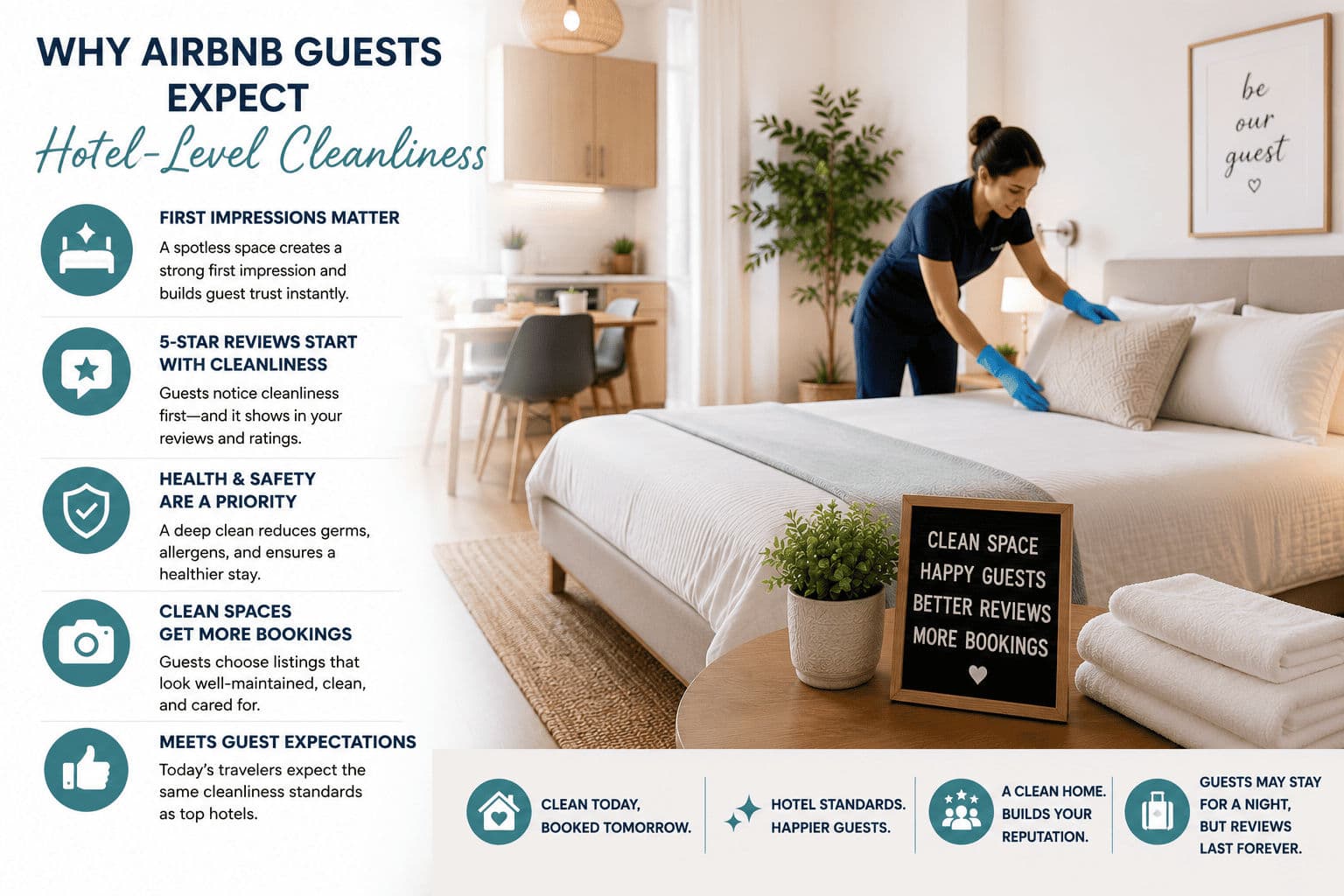
Pet-friendly short-term rentals can accumulate hair, dander, dust, stains, dirt, and odours between guest stays. Because turnover windows can remain limited, hosts may struggle to complete every cleaning task to a consistent standard. Professional cleaning services can address carpets, upholstery, floors, bathrooms, kitchens, corners, baseboards, and other overlooked areas with suitable equipment and methods. The result is a cleaner, fresher, and more presentable property that requires less intensive effort from hosts. For rental owners, professional cleaning also creates a structured maintenance routine that separates everyday turnover work from periodic deep cleaning.
Why Professional Cleaning Matters for Airbnb Properties
Short-term rentals require a different cleaning rhythm from ordinary residential homes. Each guest departure creates a new cleaning deadline, and the property needs preparation before another arrival.
Visible dust, hair, stains, residue, or unpleasant smells can affect the appearance of a rental. Therefore, professional cleaning can help hosts maintain consistent standards across repeated turnovers.
Beyond Surface Appearance
A property can look tidy while still holding dust and debris beneath furniture, inside carpet fibres, around baseboards, or within upholstery seams.
Deep cleaning addresses these less visible areas when necessary. Consequently, hosts can maintain a cleaner baseline instead of repeatedly correcting accumulated buildup during every turnover.
The Benefits of Hiring Airbnb Cleaning Professionals
Professional cleaning offers practical advantages that extend beyond saving a few hours. It can improve consistency, support household hygiene, reduce physical effort, and provide access to equipment that many hosts do not keep at home.
More Consistent Cleaning Standards
A professional cleaning team can work from a defined service scope. This structure reduces the chance that important tasks disappear during a rushed turnover.
Consistency matters because different guests may leave different levels of dirt, hair, stains, or residue. A reliable cleaning routine allows the property to receive appropriate attention after each stay.
Less Physical Work for Hosts
Turnover cleaning can involve vacuuming, mopping, scrubbing, lifting, wiping, bending, and reaching difficult areas. Repeating these tasks can consume substantial physical energy.
Professional cleaners handle designated cleaning responsibilities, allowing hosts to focus on reservations, maintenance coordination, restocking, property checks, and other rental duties.
Managing Pet Hair Across the Property
Pet hair can become one of the most noticeable cleaning problems in a pet-friendly rental. Hair can settle on floors, carpets, rugs, sofas, chairs, and bedding areas.
Why Hair Becomes Difficult to Remove
Loose hair may become embedded in carpet fibres or caught within upholstery seams. Static and repeated movement can make individual strands cling to fabric surfaces.
Professional cleaners can use commercial vacuum systems, specialised attachments, brushes, and suitable extraction methods. The chosen approach should match the material and amount of buildup.
Common Hair Collection Points
Hosts should pay attention to:
● Carpet borders and rug edges.
● Sofa seams and cushion gaps.
● Areas beneath accessible furniture.
● Baseboards and corners.
● Floor transitions.
● Furniture legs.
● Entryways.
● Fabric-covered chairs.
Detailed attention to these areas can reduce visible residue and improve the property's presentation.
Controlling Dust and Dander
Dust can accumulate naturally inside any occupied property. Pet-friendly rentals may experience additional fine debris that settles on carpets, furniture, floors, and other surfaces.
Areas That Need Detailed Cleaning
Professional cleaning can target:
● Shelves and furniture surfaces.
● Carpeted rooms.
● Upholstered seating.
● Baseboards.
● Corners.
● Areas beneath accessible furniture.
● Door frames.
● Floor edges.
● Other textured surfaces.
Routine dusting controls new accumulation, while deeper service addresses material that has settled over time.
Managing Pet-Related Odours
Odours can remain in carpets, rugs, upholstery, flooring, and other porous materials when residue stays on or inside a surface. Fragrance products may temporarily alter the smell without addressing its source.
Cleaning the Source
Professional odour control focuses on the affected material. Depending on the surface, cleaners may use extraction, controlled moisture, targeted treatment, or another suitable method.
Results vary according to residue, age, material construction, moisture exposure, and previous cleaning. Therefore, professional cleaners should set realistic expectations about the outcome.
Removing Stains and Accidental Messes
Guests can leave food spills, beverage marks, mud, dirt, and other accidental messes. Pet-friendly rentals may also experience stains on carpets, rugs, flooring, and furniture.
Prompt Treatment Helps
Fresh spills generally require less effort than established stains. Therefore, turnover staff should address suitable spills promptly.
When a stain remains, professional cleaners can assess the material and select an appropriate process. Methods may include spot treatment, controlled extraction, agitation, or other surface-specific techniques.
Why Stain Results Vary
Results depend on the substance, age, surface material, previous treatment, and condition of the affected area. Some discoloration may remain when a surface has experienced permanent change.
Responsible cleaning services should therefore avoid guaranteeing complete removal of every stain.
Professional Carpet and Rug Cleaning
Carpets and rugs can hold dust, hair, soil, and residue beneath the visible surface. Routine vacuuming removes loose debris, but periodic professional treatment can address deeper accumulation.
Signs Carpets Need Extra Attention
Hosts may consider professional carpet cleaning when:
● Hair remains after repeated vacuuming.
● High-traffic sections look darker.
● Stains remain visible.
● Odours continue.
● Dirt returns quickly.
● The carpet appears dull despite regular maintenance.
Professional equipment can loosen and extract accumulated material when the carpet construction allows the selected process.
Why Rugs Require Individual Care
Rugs differ in fibre, backing, construction, and colour stability. Consequently, cleaners should select a method suited to each material.
Appropriate treatment can remove accumulated debris while limiting unnecessary moisture or agitation.
Upholstery and Furniture Cleaning
Sofas, chairs, cushions, benches, and other upholstered furnishings can collect hair, dust, food residue, and dirt. Seams and folds often receive limited attention during fast turnover cleaning.
Detailed Upholstery Cleaning
Professional cleaners can use vacuuming, controlled moisture, extraction, or other suitable techniques according to the fabric.
Furniture legs, undersides, cushion seams, and narrow gaps also deserve attention. These locations can hold material that remains unnoticed during quick cleaning.
Floor and Hard-Surface Cleaning
Floors collect hair, dust, mud, food residue, and outdoor soil. Entryways and high-traffic areas often accumulate material faster than less-used rooms.
Areas That Need Attention
Professional floor cleaning can target:
● Entryways and thresholds.
● Hallways.
● Floor transitions.
● Grout lines.
● Corners.
● Baseboards.
● Areas beneath accessible furniture.
● Spaces around rugs.
● High-traffic sections.
The selected process should match the flooring material. Tile, stone, sealed wood, laminate, and vinyl can require different cleaning approaches.
Cleaning Bathrooms and Kitchens
Bathrooms and kitchens require careful cleaning because guests use these spaces frequently. Visible residue, water marks, food particles, grease, and dust can quickly affect their appearance.
Bathroom Cleaning
Professional cleaning can address sinks, counters, toilets, showers, floors, mirrors, fixtures, and accessible edges. Suitable cleaning products should match the surface.
Kitchen Cleaning
Kitchens may require attention to counters, cabinet fronts, floors, sinks, splash areas, appliances, and dining surfaces. Grease and food residue can require more intensive treatment than ordinary dust.
A detailed cleaning routine helps these high-use rooms remain fresh and presentable between bookings.
Cleaning Corners and Overlooked Areas
A property can appear clean while still holding debris in less visible locations. Corners, baseboards, door frames, furniture undersides, and narrow gaps often receive less attention.
Commonly Missed Locations
Professional cleaning can include:
● Behind accessible furniture.
● Under tables and chairs.
● Around baseboards.
● Along floor edges.
● Behind doors.
● Around furniture legs.
● Beneath removable cushions.
● Near floor transitions.
● Around accessible fixtures.
Addressing these locations can improve overall cleanliness and reduce recurring buildup.
Deep Cleaning Versus Turnover Cleaning
Turnover cleaning prepares a property for the next guest. Deep cleaning focuses on accumulated material and surfaces that do not require intensive treatment after every stay.
What Turnover Cleaning Covers
Routine turnover work may include:
● Vacuuming.
● Sweeping.
● Mopping.
● Dusting.
● Bathroom cleaning.
● Kitchen surface cleaning.
● Removing visible hair.
● Cleaning visible spills.
● Emptying waste.
● Wiping suitable furniture surfaces.
These tasks help prepare the property after each booking.
What Deep Cleaning Adds
Periodic deep cleaning may include:
● Carpet and rug treatment.
● Upholstery cleaning.
● Detailed floor cleaning.
● Baseboard cleaning.
● Corner and edge cleaning.
● Cleaning beneath accessible furniture.
● Stain treatment.
● Residue removal.
● Detailed wall and door cleaning.
Both levels support property maintenance. Turnover cleaning handles immediate preparation, while deep cleaning addresses buildup that develops over time.
Professional Equipment and Cleaning Techniques
Professional cleaners can use commercial vacuums, extraction systems, specialised attachments, floor machines, and material-specific tools.
Cleaning Sensitive Surfaces
Some floors, fabrics, finishes, and furnishings require controlled methods. Excessive moisture, harsh chemicals, or aggressive agitation can cause damage.
Therefore, professional cleaning should begin with consideration of the material and its condition.
How Professional Cleaning Saves Hosts Time
Managing a short-term rental involves more than cleaning. Hosts may also handle guest communication, maintenance, restocking, inspections, reservations, and property administration.
Reducing the Turnover Workload
Professional cleaners can handle demanding tasks such as vacuuming, mopping, bathroom cleaning, stain treatment, upholstery care, and detailed floor work.
Consequently, hosts can spend less time performing intensive cleaning and more time managing other property responsibilities.
Supporting Faster Property Preparation
A defined cleaning service can create a repeatable process between guest stays. This structure can make turnover planning more predictable.
For hosts seeking professional airbnb cleaning services in San Antonio, selecting a provider according to the property's surfaces, turnover schedule, cleaning priorities, and service scope can make rental maintenance more manageable.
When Professional Cleaning Becomes Necessary
Professional service becomes particularly valuable when routine turnover work no longer produces satisfactory results.
Signs a Rental Needs Deeper Cleaning
Hosts may consider professional deep cleaning when:
Hair remains embedded after regular vacuuming.
Persistent odours continue after routine cleaning.
Stains remain visible.
Floor edges show heavy buildup.
Upholstery appears visibly soiled.
Dust accumulates in overlooked areas.
Carpets look dull.
Cleaning takes longer between bookings.
Specialised equipment is required.
The property needs a detailed cleaning reset.
These signs suggest that intensive maintenance may be more effective than repeating ordinary turnover tasks.
How Often Should Airbnb Properties Receive Deep Cleaning?
No fixed schedule suits every rental. Frequency depends on booking volume, property size, flooring, furniture, guest activity, and the effectiveness of regular turnover cleaning.
Factors That Influence Frequency
Consider:
● Number of bookings.
● Carpet and rug coverage.
● Upholstered furniture.
● Pet-friendly reservations.
● Frequency of stains.
● Entryway traffic.
● Condition of floor edges.
● Dust accumulation.
● Existing cleaning standards.
Frequently booked properties may require deeper cleaning more often because buildup can accumulate quickly. Less frequently occupied properties may need intensive service less often.
Maintaining Cleanliness Between Professional Visits
Professional cleaning works best when routine turnover maintenance continues consistently. Small tasks can prevent new buildup from becoming excessive.
Practical Maintenance Checklist
Hosts can:
● Vacuum high-traffic areas.
● Remove visible hair from upholstery.
● Dust furniture and shelves.
● Clean entryway floors.
● Wipe baseboards periodically.
● Address spills promptly.
● Check corners and floor edges.
● Clean beneath accessible furniture.
● Inspect carpets for stains and odours.
● Use products suitable for each material.
These steps help maintain a cleaner baseline between professional appointments.
Factors to Consider When Hiring Cleaning Professionals
Hosts should choose a service according to the property's actual cleaning requirements. A compact apartment with hard flooring requires different attention from a large rental with carpets, rugs, upholstery, and multiple bathrooms.
What Hosts Should Check
Before hiring cleaners, consider:
● Experience with short-term rental turnovers.
● Carpet and rug cleaning capabilities.
● Upholstery cleaning methods.
● Stain-treatment procedures.
● Odour-control approaches.
● Equipment used for deep cleaning.
● Ability to clean corners and baseboards.
● Service inclusions and exclusions.
● Turnaround requirements.
● Preparation expectations.
● Pricing for additional tasks.
Clear communication helps establish realistic expectations and supports consistent results.
Frequently Asked Questions
What is the biggest benefit of hiring Airbnb cleaning professionals?
The main benefit involves consistent property preparation between guest stays. Professional cleaners can address floors, bathrooms, kitchens, furniture, carpets, upholstery, stains, hair, dust, and odours according to an established scope. They also reduce the physical workload placed on hosts during short turnover periods.
How often should pet-friendly Airbnb properties receive deep cleaning?
Frequency depends on booking volume, property size, flooring, furniture, traffic, and visible buildup. A frequently booked pet-friendly rental may need deeper cleaning more often than a property with fewer stays. Hosts should inspect carpets, upholstery, floor edges, corners, and other areas that routine turnover cleaning may not fully address.
Can professional cleaners remove pet hair from carpets?
Professional cleaners can remove loose and embedded hair from suitable carpets using commercial vacuum systems, specialised tools, or extraction methods. Results depend on fibre type, construction, condition, and accumulation. Regular vacuuming remains important because professional service addresses existing buildup while routine maintenance controls newly deposited hair.
Can professional cleaning remove pet-related odours?
Professional cleaning can address residue that contributes to unwanted smells on suitable carpets, rugs, upholstery, floors, and other materials. Methods depend on the surface and source. Results vary according to residue age, material construction, moisture exposure, and previous treatments, so complete removal cannot be guaranteed in every situation.
Which areas should receive deep cleaning in an Airbnb?
Carpets, rugs, upholstery, floor edges, baseboards, corners, entryways, grout, furniture undersides, and difficult-to-reach locations commonly benefit from deeper attention. Bathrooms and kitchens may also require periodic intensive cleaning. The final scope should reflect property size, booking frequency, surface types, visible buildup, and the condition after routine turnovers.
Is professional carpet cleaning useful for Airbnb properties?
Professional carpet cleaning can remove accumulated hair, dust, soil, stains, and residue that routine vacuuming may not fully address. The appropriate method depends on carpet construction and condition. Periodic professional treatment complements regular turnover cleaning and can help maintain a cleaner, fresher, and more presentable rental.
Can upholstery cleaning remove accumulated hair and dirt?
Professional upholstery cleaning can address hair, dust, food particles, and dirt around cushions, seams, folds, and other difficult areas. Cleaners should select a process suitable for the fabric because different materials react differently to moisture and agitation. Results depend on construction, condition, previous treatment, and the extent of buildup.
What is the difference between routine turnover cleaning and deep cleaning?
Routine turnover cleaning prepares the property for the next guest by handling floors, bathrooms, kitchens, surfaces, visible hair, waste, and ordinary messes. Deep cleaning targets accumulated dirt and overlooked areas such as carpets, upholstery, baseboards, floor edges, corners, and furniture details. Both levels support consistent property maintenance.
When should an Airbnb host hire professional cleaners?
Professional cleaning can help when turnover deadlines are short, routine work has become physically demanding, or the property no longer reaches the desired standard after ordinary cleaning. Hosts may also need professional service when carpets, upholstery, stains, odours, or difficult areas require specialised equipment and techniques.
What should hosts check before hiring a cleaning service?
Hosts should confirm experience with rental turnovers, cleaning methods, equipment, carpets, rugs, upholstery, stain treatment, odour control, and deep cleaning. They should also clarify service scope, turnaround times, preparation requirements, pricing, and additional charges. Clear expectations help ensure the cleaning service matches the property's actual needs.
Conclusion
Hiring Airbnb cleaning professionals can provide practical advantages for hosts who need consistent, efficient, and detailed property preparation. Professional cleaning can address pet hair, dust, dander, stains, dirt, odours, carpets, upholstery, floors, bathrooms, kitchens, corners, and overlooked surfaces. Routine turnover cleaning remains essential, while periodic deep cleaning handles accumulated buildup that ordinary service may leave behind. By combining both approaches, hosts can reduce physical workload, maintain a fresher and more hygienic rental, and create a dependable cleaning process between bookings. A structured professional service can therefore make short-term rental maintenance more manageable.