Why Airbnb Guests Expect Hotel-Level Cleanliness
Explore why Airbnb guests anticipate hotel-level cleanliness and its impact on reviews and bookings.
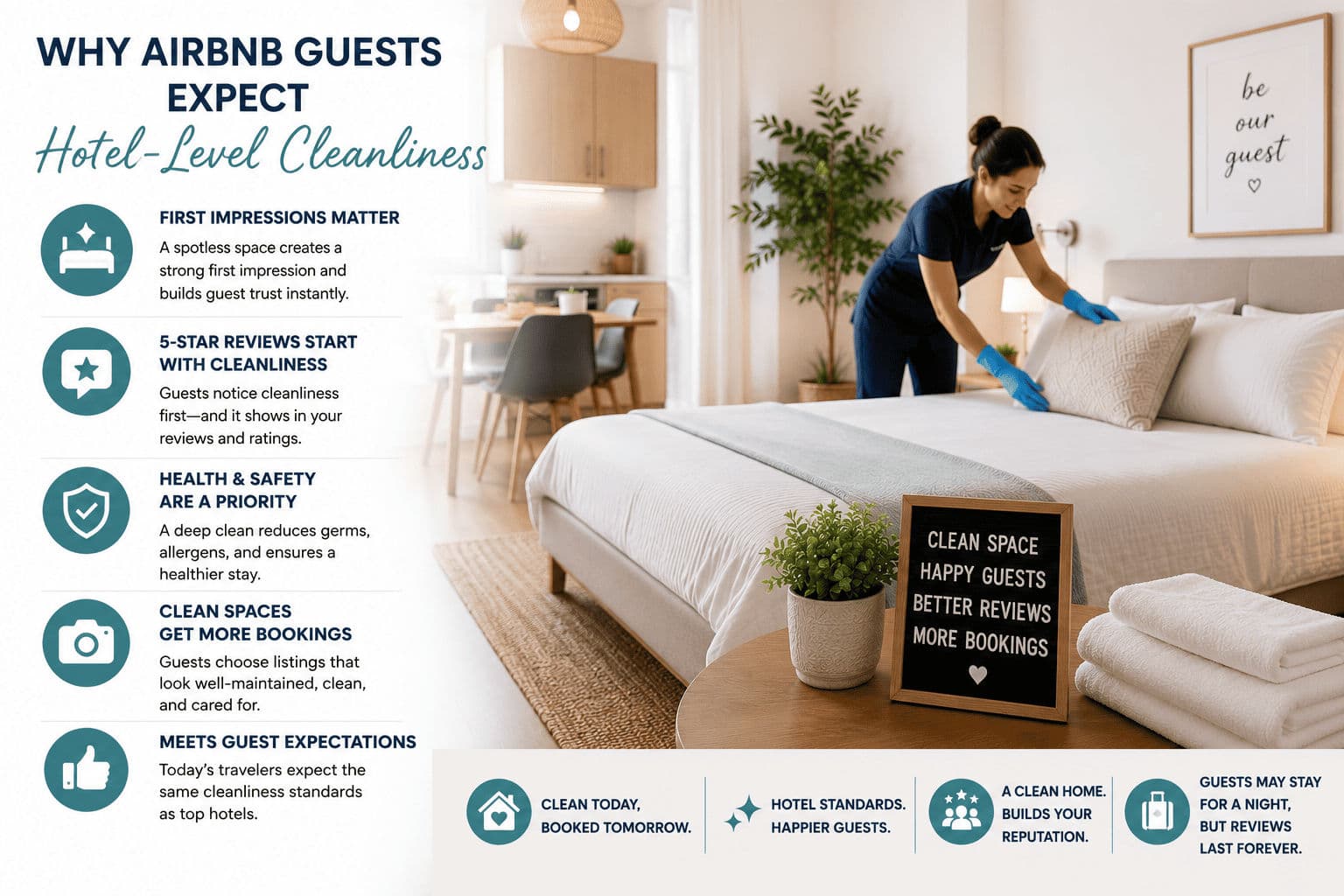
Visible hair, dust, stains, unpleasant odours, dirty floors, or residue on furniture can quickly affect that first impression. Professional cleaning helps address these challenges through detailed surface care, sanitation, stain treatment, odour control, and deep cleaning. As a result, hosts can maintain a fresher and more presentable property between bookings while reducing the physical workload associated with turnover cleaning.
Why Cleanliness Shapes the Guest Experience
Cleanliness forms a practical part of a short-term rental experience. Guests use bedrooms, bathrooms, kitchens, living areas, floors, furniture, and other surfaces within a limited stay, so visible dirt can affect their perception of the entire property.
A clean room signals that the space received proper attention before arrival. Moreover, consistent cleaning helps prevent small problems from becoming noticeable complaints.
First Impressions Start With the Property
Guests often notice floors, entryways, bathrooms, bedding areas, furniture, and visible surfaces shortly after entering. Dust around corners, hair on upholstery, stains on carpets, or marks on doors can make the property appear less maintained.
Therefore, cleaning should address both obvious and overlooked areas. Professional cleaners can work through a defined checklist and give each room appropriate attention.
Cleanliness Is More Than Appearance
A property can look tidy while still containing accumulated debris. Carpets may hold dust and hair, upholstery may contain residue, and floor edges may collect dirt.
Consequently, turnover cleaning should combine visible surface cleaning with deeper attention where necessary. This approach supports general household hygiene without treating appearance as the only measure of cleanliness.
Why Pet-Friendly Rentals Face Extra Cleaning Challenges
Pet-friendly short-term rentals can experience more hair, dander, outdoor dirt, and accidental messes than properties without pets. These materials can travel from entryways into living spaces and settle on several types of surfaces.
Common Problem Areas
Hosts should pay attention to:
● Carpets and rugs.
● Upholstered sofas and chairs.
● Hard floors.
● Entryways and thresholds.
● Baseboards and corners.
● Areas beneath accessible furniture.
● Floor transitions.
● Door frames and lower walls.
● Cushions and fabric surfaces.
● Frequently used household areas.
Each material requires an appropriate cleaning method. For example, a process suitable for sealed tile may not suit finished wood or delicate upholstery.
Why Turnover Cleaning Can Become Demanding
A short window between guests can require several cleaning tasks. Hair removal, stain treatment, floor cleaning, bathroom sanitation, dusting, and odour control can take significant time.
Professional cleaning can organise these tasks into a structured process. Therefore, hosts can maintain more consistent preparation standards without relying entirely on rushed surface cleaning.
Removing Pet Hair Before Guests Arrive
Pet hair can quickly become noticeable on dark furniture, carpets, rugs, and flooring. Loose strands may also settle around furniture legs, baseboards, and corners.
Why Hair Becomes Embedded
Static, fabric texture, and repeated movement can push hair into carpets and upholstery. Standard vacuuming may remove loose strands while leaving some material behind.
Professional cleaners can use commercial vacuum systems, specialised attachments, brushes, and suitable extraction methods. The appropriate technique depends on the surface, fibre type, and level of accumulation.
Areas That Deserve Detailed Attention
Hair can remain in:
● Sofa seams.
● Cushion edges.
● Carpet borders.
● Rug surfaces.
● Floor corners.
● Baseboards.
● Furniture gaps.
● Areas beneath accessible furniture.
Detailed cleaning of these locations helps create a cleaner guest environment and reduces visible residue that could affect a property's presentation.
Managing Dust and Dander
Dust accumulates naturally inside occupied properties. In pet-friendly rentals, fine debris can combine with hair and other household material, creating additional cleaning demands.
Cleaning Beyond Open Surfaces
Quick turnover cleaning often focuses on visible shelves, floors, counters, and furniture. However, dust can settle beneath furniture, around baseboards, inside corners, and on textured surfaces.
Professional deep cleaning can target these locations through detailed vacuuming and suitable surface cleaning. High-reach tools can also address accessible areas that routine cleaning may overlook.
Why Regular Removal Matters
Deep cleaning does not prevent new dust from appearing. Instead, it establishes a cleaner baseline for routine turnover work.
Consequently, regular dusting and vacuuming can control new buildup while periodic professional service addresses areas that require more intensive attention.
Odour Control That Goes Beyond Fragrance
Unpleasant odours can affect guest comfort, especially when residue remains in carpets, upholstery, rugs, floors, or other porous surfaces. Fragrance can temporarily change the smell without removing its source.
Cleaning the Source
Professional odour control focuses on treating the affected surface. Depending on the material, cleaners may use extraction, controlled moisture, targeted treatment, or another suitable method.
Results vary according to the source, age of residue, surface construction, moisture exposure, and previous cleaning attempts. Therefore, responsible cleaners should avoid promising identical results for every odour problem.
Why Freshness Matters in a Rental
A fresh-smelling property can create a more comfortable arrival experience. Moreover, removing residue rather than simply masking odours supports more effective household cleaning.
Hosts should also inspect carpets, upholstered furniture, waste areas, and flooring when an unwanted smell persists.
Stain Removal and Accidental Messes
Guests can encounter stains from food, drinks, outdoor dirt, mud, and other accidental messes. Properties that permit pets may face additional marks on carpets, rugs, flooring, and furniture.
Prompt Treatment Helps
Fresh spills generally require less effort than established stains. Therefore, turnover teams should address suitable spills as soon as practical.
When a stain remains, professional cleaners can assess the surface and select an appropriate treatment. Depending on the material, they may use spot treatment, controlled extraction, agitation, or another suitable process.
Results Depend on the Surface
Stain-removal results depend on the substance, age, material condition, previous treatments, and degree of penetration. Some discoloration may remain when the surface itself has changed.
For that reason, cleaning professionals should provide realistic expectations rather than guarantee complete removal of every mark.
Carpet and Rug Cleaning for Guest-Ready Properties
Carpets and rugs can collect dust, hair, soil, and residue below their visible surface. Routine vacuuming remains important, but periodic professional cleaning can address accumulated material more deeply.
When Professional Carpet Cleaning Helps
Hosts may consider professional carpet cleaning when:
● Hair remains after repeated vacuuming.
● High-traffic areas appear darker.
● Stains remain visible.
● Odours persist.
● Dirt returns quickly after routine cleaning.
● Carpets look dull despite regular maintenance.
Professional equipment can loosen and extract accumulated debris when the carpet construction permits the selected process.
Rugs Need Surface-Specific Care
Rugs differ in fibre, backing, construction, and colour stability. Consequently, cleaners should choose methods according to each rug's material and condition.
Suitable cleaning can improve appearance and remove accumulated debris without applying unnecessary moisture or agitation.
Upholstery and Furniture Cleaning
Sofas, chairs, cushions, benches, and other upholstered furnishings can collect dust, hair, food particles, and residue. Seams and folds often receive less attention during quick turnover work.
Professional Upholstery Treatment
Professional upholstery cleaning can address surface and embedded debris through vacuuming, controlled moisture, extraction, or another suitable method.
Furniture legs, undersides, seams, and narrow gaps can also hold material. Detailed cleaning of these locations can help maintain a more presentable guest space.
Material Assessment Comes First
Different upholstery fabrics respond differently to moisture, heat, and agitation. Therefore, cleaners should assess the material before selecting a treatment.
This approach reduces unnecessary exposure to unsuitable products and helps protect the appearance of furniture.
Floor and Hard-Surface Cleaning
Floors receive constant traffic and can collect hair, dust, mud, food residue, and outdoor soil. Entryways and high-use areas often show buildup faster than less-used rooms.
Areas That Need Extra Attention
Professional cleaning can target:
● Entryways.
● Hallways.
● Floor transitions.
● Grout lines.
● Corners.
● Baseboards.
● Areas beneath accessible furniture.
● Spaces around rugs.
● High-traffic sections.
The cleaning process should match the flooring. Tile, stone, sealed wood, laminate, and vinyl may require different levels of moisture, agitation, and product selection.
Why Edges Matter
Routine mopping can leave residue along corners and floor edges. Over time, this buildup can affect the appearance of a property.
Detailed cleaning gives these locations dedicated attention and helps create a more consistent presentation throughout the rental.
Deep Cleaning Versus Turnover Cleaning
Turnover cleaning prepares a rental for the next guest. Deep cleaning addresses accumulated dirt and areas that do not require attention after every stay.
What Turnover Cleaning Usually Covers
Routine turnover work may include:
● Vacuuming.
● Sweeping.
● Mopping.
● Dusting.
● Bathroom cleaning.
● Kitchen surface cleaning.
● Changing linens where included.
● Removing visible hair.
● Emptying waste.
● Cleaning visible spills.
These tasks help prepare the property between bookings.
What Deep Cleaning Adds
Periodic deep cleaning may include:
● Carpet and rug treatment.
● Upholstery cleaning.
● Detailed floor cleaning.
● Baseboard cleaning.
● Corner and edge cleaning.
● Cleaning beneath accessible furniture.
● Stain treatment.
● Residue removal.
● Detailed wall and door cleaning.
Both levels support consistent property maintenance. Turnover cleaning handles immediate guest preparation, while deep cleaning addresses accumulated buildup.
Professional Equipment Supports Consistent Results
Short-term rental properties can contain several materials that require different cleaning approaches. Professional equipment may include commercial vacuums, extraction systems, specialised attachments, and suitable floor-cleaning tools.
Why Equipment Matters
Commercial equipment can remove embedded hair and debris from suitable carpets and upholstery. Extraction systems may also help remove suspended soil from appropriate materials.
However, stronger equipment does not automatically produce better results. Proper settings, technique, moisture control, and product selection remain essential.
How Professional Cleaning Saves Hosts Time
Turnover periods can involve strict scheduling. Hosts may need to coordinate laundry, inspections, restocking, maintenance, guest communication, and cleaning within a limited timeframe.
Reducing the Physical Workload
Professional cleaners can handle demanding tasks such as detailed vacuuming, floor cleaning, stain treatment, upholstery care, and difficult-area cleaning.
Consequently, hosts can allocate more time to other property responsibilities without leaving intensive cleaning unfinished.
For hosts seeking professional airbnb cleaning services in San Antonio, choosing a provider according to the property's surfaces, turnover schedule, cleaning priorities, and service scope can make guest preparation more manageable.
When a Rental Needs Professional Deep Cleaning
Professional deep cleaning becomes useful when routine turnover work no longer provides satisfactory results.
Signs That Deeper Cleaning Is Needed
Hosts may consider a deeper service when:
Hair remains embedded after regular vacuuming.
Persistent odours continue after routine cleaning.
Stains remain visible.
Floor edges show buildup.
Upholstery looks noticeably soiled.
Dust accumulates in overlooked areas.
Carpets appear dull.
Cleaning takes longer between bookings.
Specialised equipment is required.
The property needs a detailed cleaning reset.
These signs indicate that intensive maintenance may provide better results than repeating standard turnover tasks.
How Often Should Airbnb Properties Receive Deep Cleaning?
There is no single schedule suitable for every rental. Cleaning frequency depends on booking frequency, property size, flooring, furniture, guest activity, and the effectiveness of routine turnover cleaning.
Factors That Influence Frequency
Consider:
● Number of guest turnovers.
● Carpet and rug coverage.
● Upholstered furniture.
● Pet-friendly booking policies.
● Frequency of stains.
● Entryway traffic.
● Condition of floor edges.
● Dust accumulation.
● Existing cleaning standards.
Properties with frequent bookings may require deeper cleaning more often. Less frequently occupied rentals may need it less frequently.
Factors to Consider When Hiring Professional Cleaners
A short-term rental cleaning service should match the property's actual needs. A studio with hard floors requires different attention from a large home with multiple carpets, rugs, bathrooms, and upholstered rooms.
What Hosts Should Check
Before hiring cleaners, consider:
● Experience with rental turnover cleaning.
● Carpet and rug cleaning capabilities.
● Upholstery cleaning methods.
● Stain-treatment procedures.
● Odour-control approaches.
● Equipment available for deep cleaning.
● Ability to clean corners and baseboards.
● Service inclusions and exclusions.
● Turnaround requirements.
● Preparation expectations.
● Pricing for additional tasks.
Clear communication helps establish realistic expectations and supports consistent guest-ready preparation.
Frequently Asked Questions
Why do Airbnb guests expect strong cleanliness standards?
Guests use short-term rentals as temporary living spaces and expect the property to feel clean upon arrival. Visible hair, dust, stains, residue, or odours can affect that impression. Consistent professional cleaning helps hosts prepare bedrooms, bathrooms, kitchens, floors, furniture, and shared spaces before each booking.
How often should Airbnb hosts schedule professional deep cleaning?
The frequency depends on booking volume, property size, flooring, furniture, guest activity, and turnover standards. Frequently booked properties may need deeper cleaning more often because buildup accumulates faster. Hosts should assess carpets, upholstery, floor edges, corners, and other areas that routine turnover cleaning may not fully address.
Can professional cleaners remove pet hair from Airbnb carpets?
Professional cleaners can remove loose and embedded hair from suitable carpets using commercial vacuum systems, specialised attachments, or extraction methods. Results depend on carpet construction, fibre type, condition, and the amount of accumulation. Routine vacuuming remains necessary between deep-cleaning appointments to control newly deposited hair.
Can professional cleaning remove pet-related odours?
Professional cleaning can address residue contributing to unwanted odours in suitable carpets, upholstery, rugs, floors, and other materials. Methods vary according to the affected surface. Results also depend on the source, age, and condition of the residue. Cleaning aims to remove the source rather than simply cover the smell.
Which areas should receive deep cleaning between bookings?
Deep cleaning can prioritise carpets, rugs, upholstery, floor edges, baseboards, corners, grout, entryways, furniture undersides, and other overlooked areas. High-traffic locations generally deserve particular attention. The final scope should reflect the property's materials, booking frequency, visible buildup, and the amount of cleaning required after routine turnover.
Is professional carpet cleaning necessary for short-term rentals?
Professional carpet cleaning can be useful when routine vacuuming no longer controls embedded hair, soil, stains, or odours. The appropriate process depends on carpet construction and condition. Periodic treatment complements regular turnover cleaning and can help maintain a more presentable property between intensive cleaning appointments.
Can upholstery cleaning remove accumulated hair and dirt?
Professional upholstery cleaning can address hair, dust, food residue, and dirt around cushions, seams, folds, and other difficult sections. Cleaners should select methods according to the fabric because materials respond differently to moisture and agitation. Results depend on construction, condition, previous treatments, and the amount of accumulated debris.
What is the difference between turnover and deep cleaning?
Turnover cleaning prepares a property for the next guest by addressing routine floors, bathrooms, kitchens, surfaces, visible hair, waste, and other immediate tasks. Deep cleaning targets accumulated dirt and overlooked areas such as upholstery, carpets, baseboards, floor edges, corners, and difficult spaces. Both services support property maintenance.
When should an Airbnb host hire professional cleaners?
Professional cleaners can help when turnover deadlines are tight, cleaning tasks have become physically demanding, or routine work no longer produces satisfactory results. Hosts may also need professional service when carpets, upholstery, stains, odours, and overlooked areas require specialised equipment or techniques that ordinary household tools cannot provide.
What should hosts check before hiring an Airbnb cleaning service?
Hosts should confirm the provider's experience with short-term rental turnovers, cleaning methods, equipment, carpet care, upholstery treatment, stain removal, odour control, and deep cleaning. They should also clarify service scope, turnaround expectations, preparation requirements, pricing, and additional charges. Clear communication helps create consistent cleaning standards between guest stays.
Conclusion
Airbnb guests expect a property to feel clean, fresh, hygienic, and properly maintained when they arrive. For pet-friendly rentals, hair, dander, dirt, stains, and odours can create additional cleaning demands that require more than quick surface work. Professional cleaning can address carpets, upholstery, floors, bathrooms, kitchens, corners, baseboards, and overlooked areas with suitable equipment and methods. Combining consistent turnover cleaning with periodic deep cleaning helps hosts maintain a reliable standard while reducing physical workload. A structured cleaning routine ultimately supports a more presentable and comfortable rental environment for each new guest.