Why Do High-Traffic Workplaces Need Frequent Cleaning?
Explore why high-traffic workplaces need frequent cleaning to manage hygiene and appearance effectively.
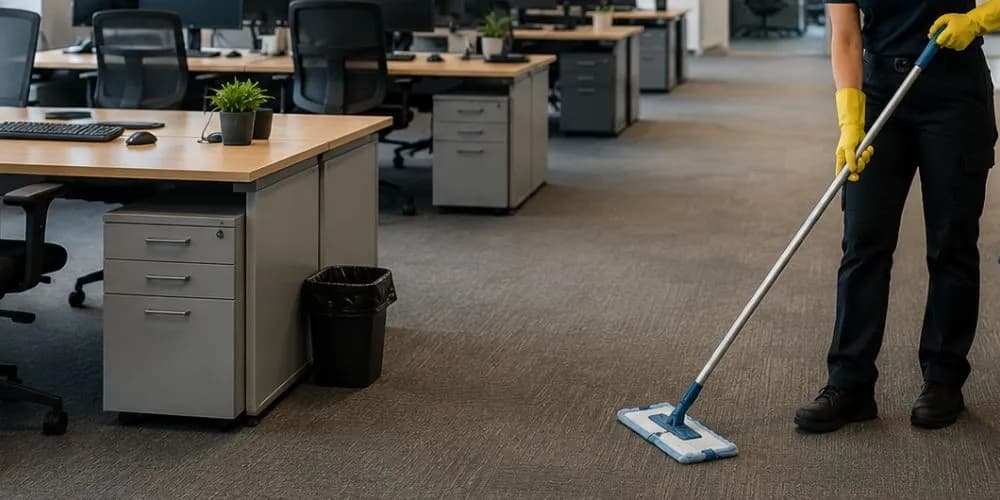
High-traffic workplaces accumulate cleaning needs faster because more people repeatedly use the same entrances, floors, washrooms, kitchens, corridors, and shared spaces. Constant movement introduces dirt, moisture, waste, surface marks, and spills at a faster rate than lightly occupied premises. As a result, cleaning frequency should reflect how the property operates rather than relying on a fixed schedule that treats every workplace alike.
What Makes a Workplace High Traffic?
A high-traffic workplace is one where employees, customers, visitors, contractors, or deliveries create repeated movement throughout the premises. Traffic levels depend on more than building size.
Important factors include:
Number of employees
Customer and visitor volume
Length of operating hours
Shift patterns
Shared facility usage
Frequency of deliveries
Building layout
Number of active entrances
Movement through corridors and communal spaces
A relatively small office can still experience heavy traffic if many people use the same reception, washrooms, kitchen, and circulation routes throughout the day.
Why Does High Foot Traffic Increase Cleaning Needs?
Repeated movement creates a direct increase in routine cleaning workload. The more people who enter and move through a workplace, the faster dirt, debris, waste, and visible marks appear.
Dirt and Debris Accumulate Faster
Shoes can carry dust, soil, moisture, grit, and outdoor debris into a building. Deliveries and repeated door use may add further contamination around entrances and loading points.
Rain, mud, dry dust, and seasonal conditions can increase this effect. Consequently, entrance mats, lobbies, corridors, and nearby work areas may require more frequent attention.
Floors Require More Frequent Attention
High foot traffic affects carpets, entrance mats, tiles, vinyl, and other suitable hard floors. Dirt becomes more visible when hundreds of footsteps pass through the same route.
Regular vacuuming, sweeping, mopping, and spot cleaning help control visible soil and spills before they spread further through the property.
Waste Builds Up More Quickly
Busy workplaces often generate greater volumes of general waste and recycling. Bins around desks, kitchens, break rooms, reception areas, and communal zones may fill faster when occupancy increases.
Frequent removal prevents overflowing containers and reduces the amount of accumulated waste cleaners must handle during the next scheduled visit.
Which High-Traffic Areas Need the Most Attention?
Cleaning priorities should follow actual usage patterns. Some rooms may need frequent attention throughout the working week, while less-used areas can follow a lighter schedule.
Common priority areas include:
Entrances and lobbies
Reception areas
Corridors and stairways
Lifts where applicable
Washrooms
Kitchens and break rooms
Meeting rooms
Shared workspaces
Customer waiting areas
Waste and recycling points
The busiest zones usually require the highest cleaning frequency because they accumulate dirt, waste, marks, and general wear faster than private or lightly occupied rooms.
Why Do Busy Washrooms and Shared Spaces Need Frequent Cleaning?
Repeated use increases cleaning demand in washrooms, kitchens, break rooms, and meeting areas. More people create more waste, surface contact, floor debris, spills, and demand for agreed consumables.
Routine tasks may include cleaning fixtures, wiping suitable shared surfaces, emptying bins, maintaining floors, replenishing agreed washroom supplies, and addressing visible spills or marks. A daily cleaning service can help manage these recurring tasks before they build into a larger workload.
How Does Frequent Cleaning Support Workplace Presentation?
Busy commercial properties often receive clients, tenants, applicants, suppliers, and other visitors. Their movement places extra pressure on entrances, reception areas, meeting rooms, washrooms, and visible shared spaces.
Frequent cleaning helps keep these areas consistently presentable rather than allowing several days of marks, debris, or waste to accumulate. This is especially relevant where the condition of customer-facing spaces forms part of normal property standards.
What Happens When Cleaning Frequency Is Too Low?
Insufficient cleaning frequency can allow routine issues to remain visible for longer. The effect depends on occupancy, operating hours, facility use, and traffic levels.
Potential problems include:
Overflowing bins
Visible floor debris
Dirt accumulation
Untidy shared spaces
Surface marks remaining between visits
Larger workloads at the next cleaning session
Inconsistent presentation
Spills remaining unattended longer
Customer-facing spaces appearing poorly maintained
A schedule that works for a low-traffic office may therefore be unsuitable for a property with constant movement.
Can Frequent Cleaning Reduce Larger Cleaning Workloads?
Yes. Frequent routine maintenance can prevent ordinary dirt, waste, and visible mess from accumulating over several days.
Smaller recurring tasks can be easier to manage than one large cleaning session after substantial build-up. However, routine maintenance does not replace periodic intensive cleaning, as some surfaces and areas still require deeper treatment at longer intervals.
Daily Cleaning and Periodic Deep Cleaning Serve Different Purposes
Routine cleaning addresses recurring maintenance, while periodic work targets tasks that do not require completion every working day.
Periodic cleaning may include:
Carpet extraction
Upholstery cleaning
Detailed floor care
High-level dusting
Window cleaning
Hard-to-reach areas
Other specialist property tasks
Both frequencies can form part of the same maintenance programme when the property requires them.
How Can a Business Decide Whether Daily Cleaning Is Necessary?
Businesses should assess visible cleaning demand rather than select a frequency arbitrarily.
Useful questions include:
How many people use the workplace each day?
How quickly do entrances and floors become dirty?
How often do bins fill?
How heavily are washrooms used?
Are kitchens and break rooms continuously occupied?
Does the property receive regular visitors?
Does the workplace operate long hours or multiple shifts?
Which areas become untidy first?
Do cleaning issues develop between scheduled visits?
Could different areas follow different frequencies?
Observed usage provides a stronger basis for scheduling than property size alone.
Do All Areas Need Cleaning at the Same Frequency?
No. Even a high-traffic workplace can use different cleaning frequencies across the same property.
Entrances, washrooms, kitchens, reception areas, and heavily used corridors may need frequent attention, while storage rooms, private offices, or low-use spaces may require less. Area-based scheduling helps direct cleaning time towards the locations where dirt, waste, and usage create the greatest demand.
Conclusion
High-traffic workplaces generate cleaning requirements faster because repeated movement increases dirt, waste, floor soiling, shared-space use, and visible wear. Appropriate cleaning frequency should reflect occupancy, visitor volume, operating hours, facility usage, and the condition of individual areas. Businesses can improve consistency by prioritising busy zones while allowing lightly used spaces to follow a different schedule.